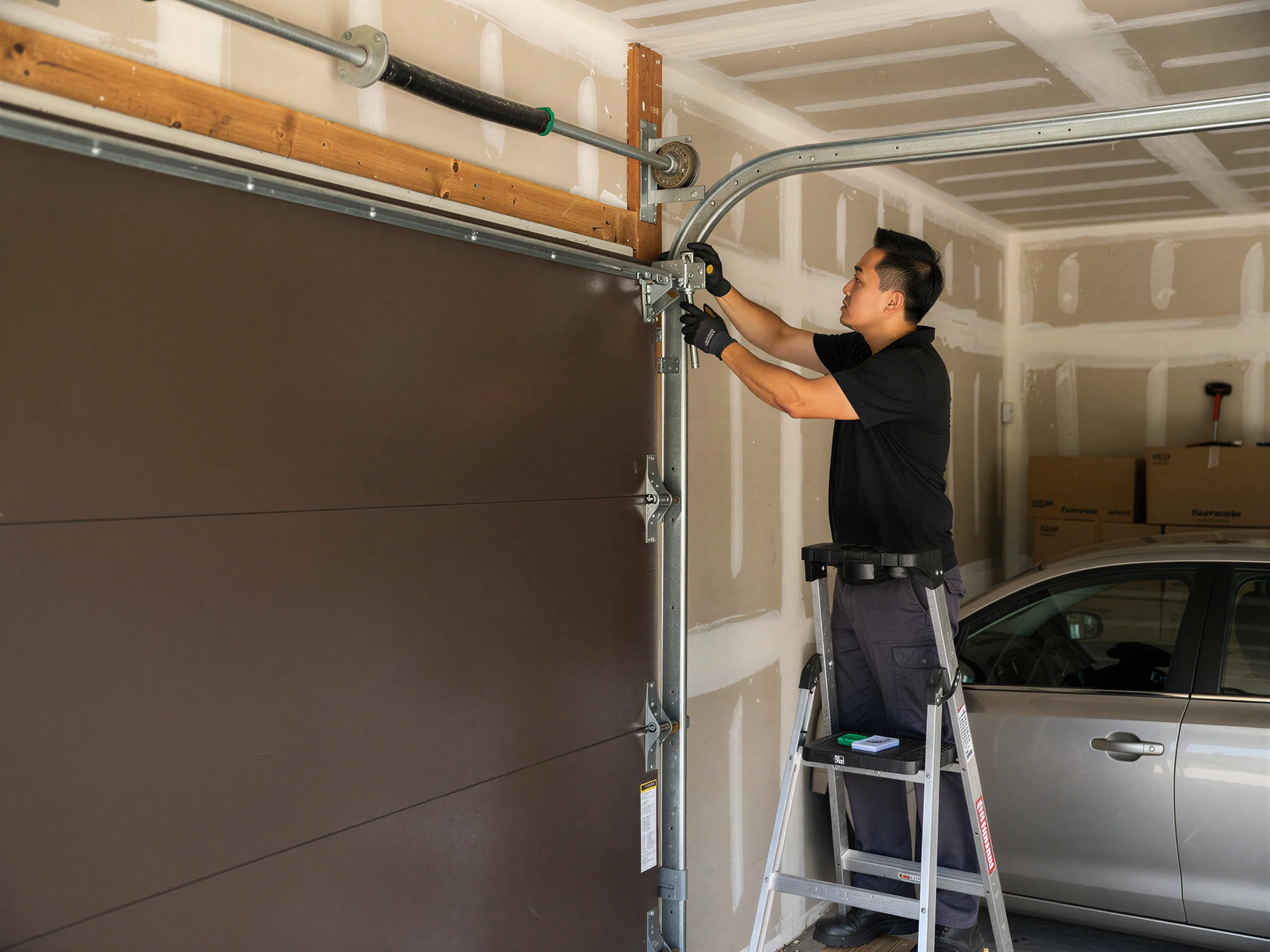
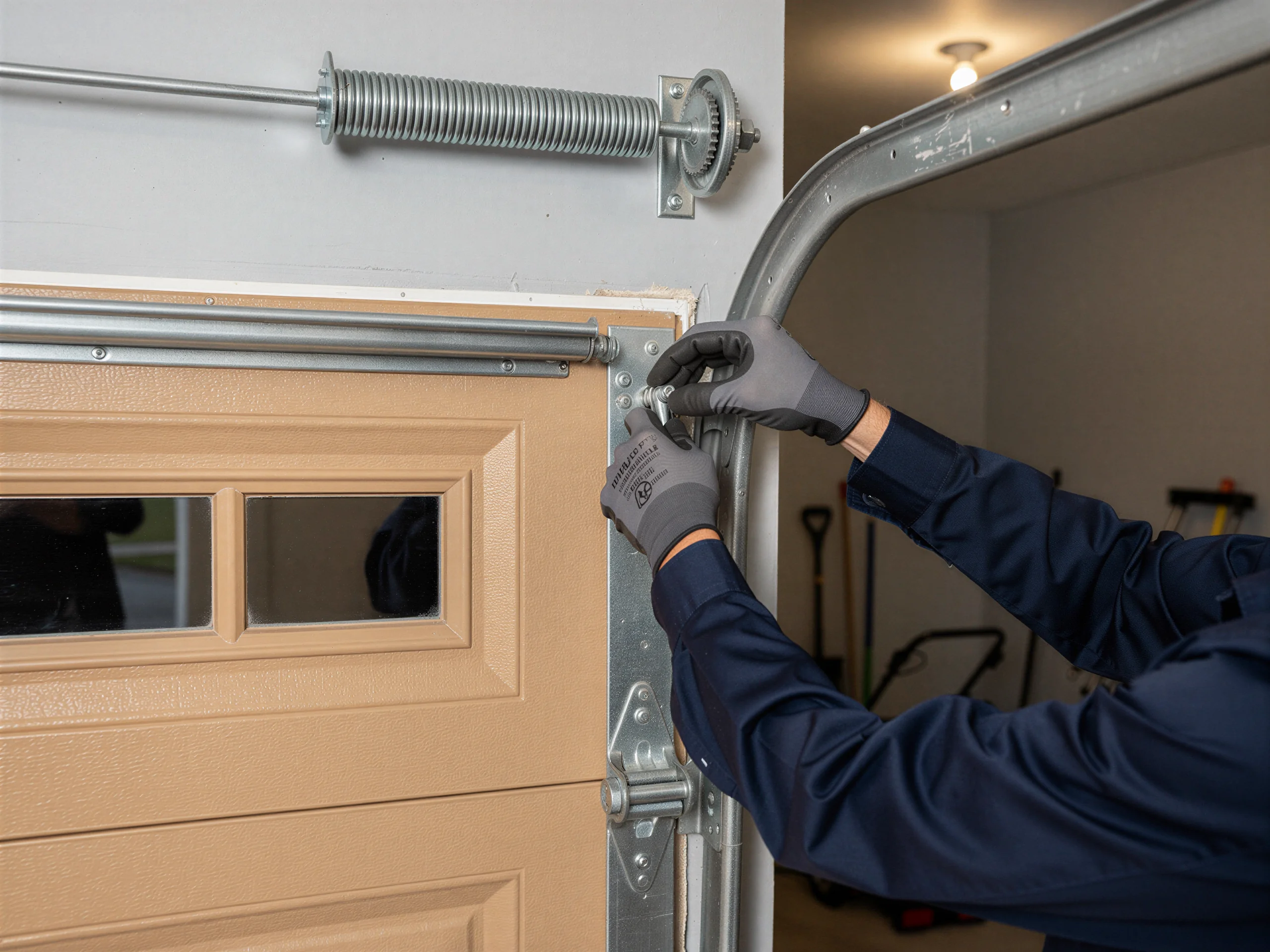
Housing across this service area was mostly built between 1962 and 2013, with the median build year landing around 1989 and the bulk of the stock dating to the 1980s and 90s. That matters for rollers because builder-grade doors from that era almost always shipped with plain steel rollers riding directly in the track, no nylon, no sealed bearing. Steel-on-steel wears fast, and it wears louder as it goes.
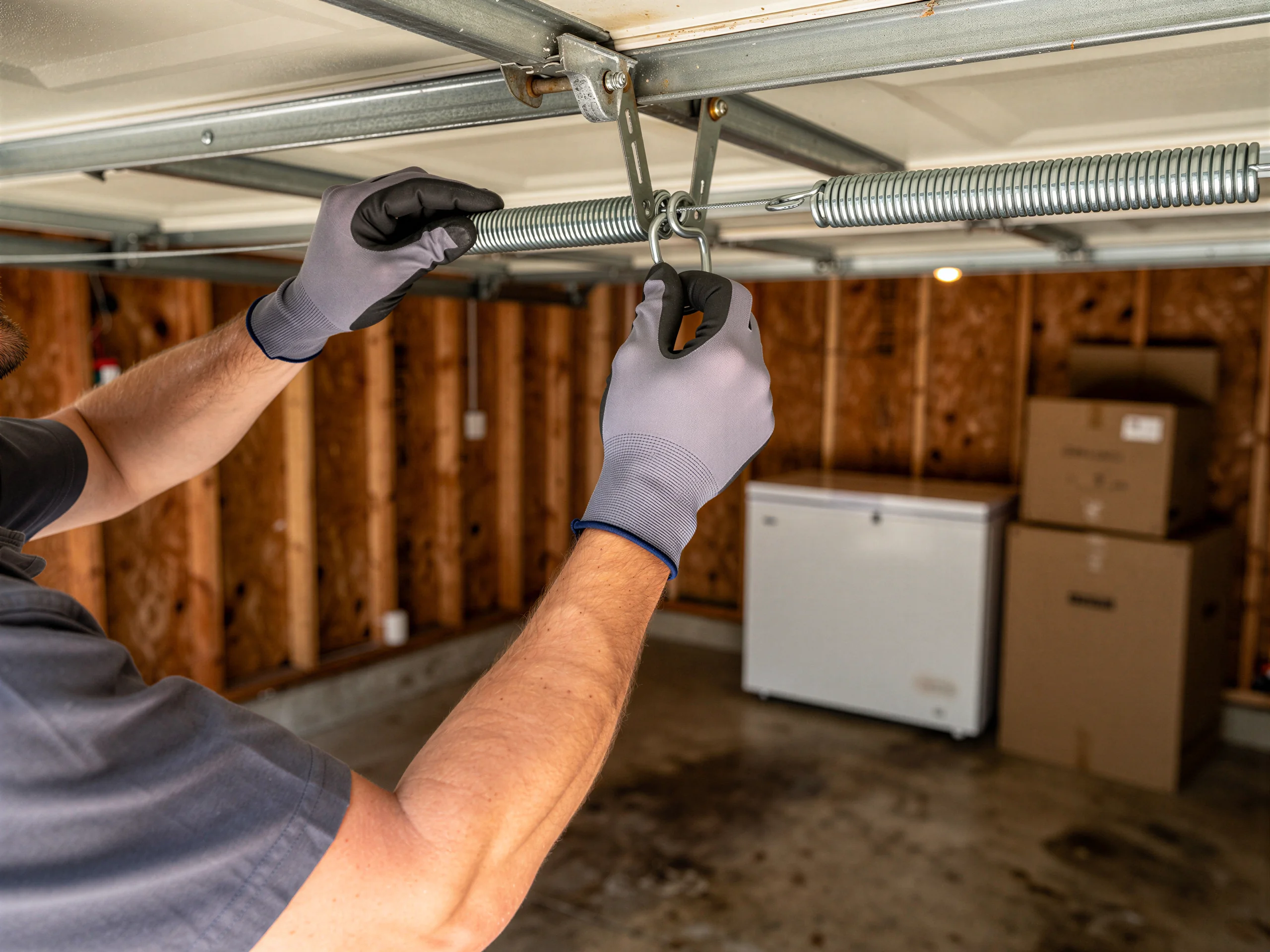
The climate here sits in a mild band but still sees occasional freezes, and that swing matters more than people think. A roller that's fine in July can bind up on a cold morning when the track contracts slightly and old grease has gone stiff. Add 30-plus years of that cycle repeating on the same hardware and you get flat spots on the roller wheel, chipped nylon on the newer replacements, or rust pitting on the steel ones. None of this is dramatic failure - it's slow wear that finally announces itself with noise or a door that hangs up a few inches off the ground.
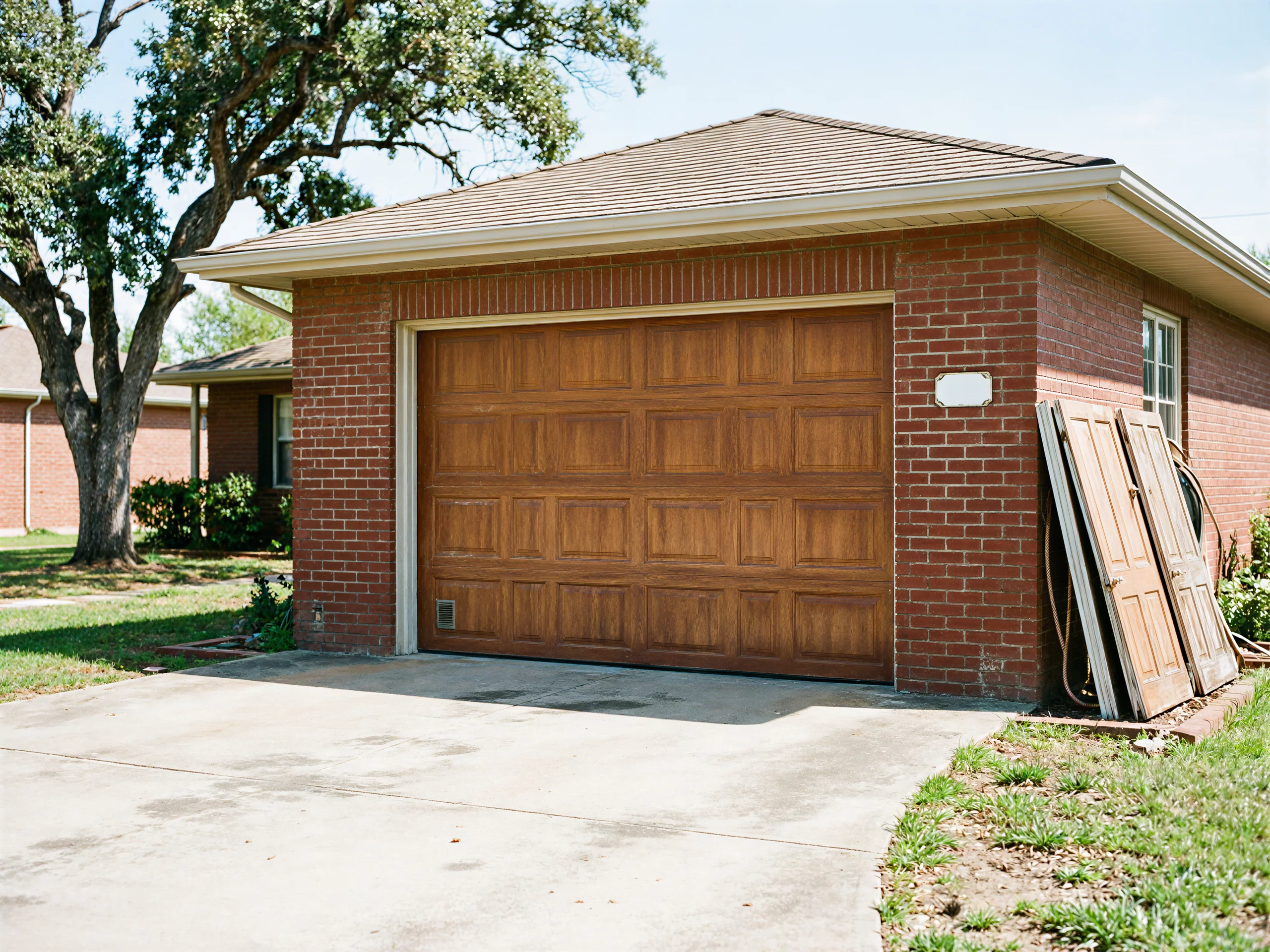
Across the roughly 18,278 owner-occupied houses in this area, a lot of them are sitting right in that window where original rollers have simply outlived their design life.