
Scored drum adds time
If a cable snapped along with it, or the drum is scored, that adds time but still fits in one visit for most houses in this area. Where it stretches out is parts availability on older doors.
Denham Springs, LA
Garage door repair for Denham Springs homes built 1962-2013, where torsion springs and worn rollers fail from humidity swings and occasional freeze. Local, fast, honest.
Local causes
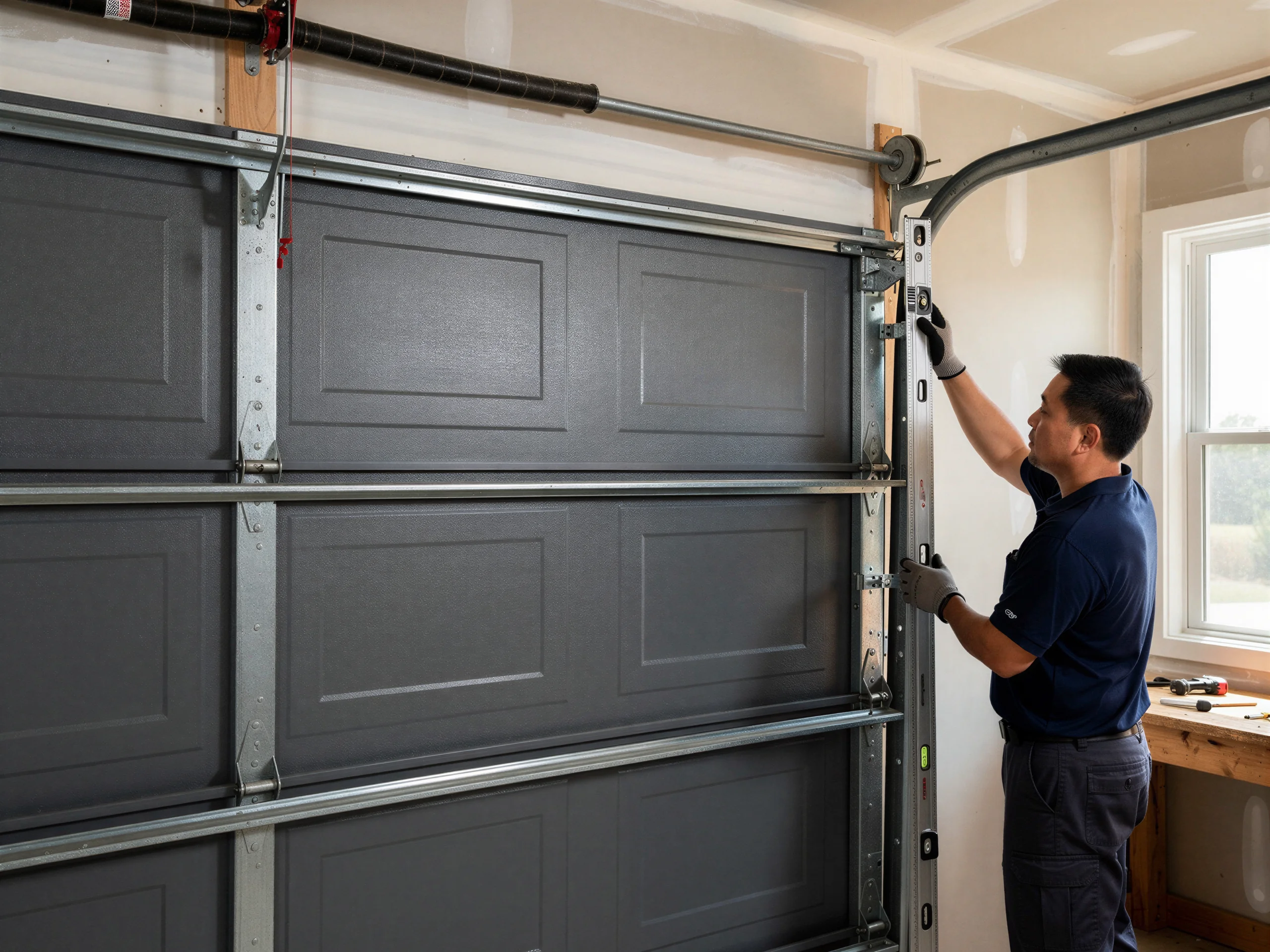
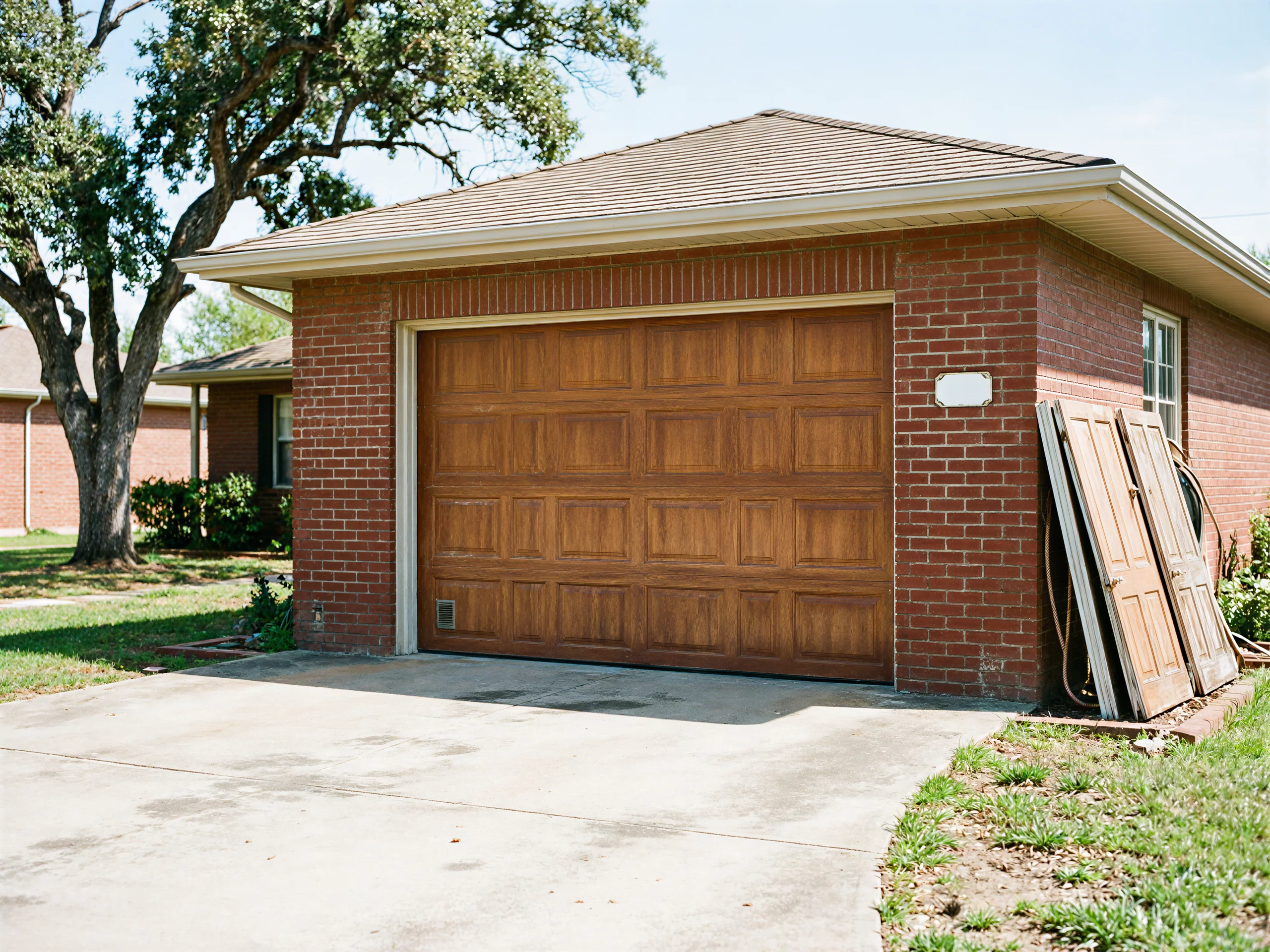
Most of the garage doors we get called out on in Denham Springs sit on houses built somewhere between 1962 and 2013, with the bulk of the stock dating to the 1980s and 90s across the subdivisions here. That matters because a door installed during that window is now 25 to 40 years old, and the torsion spring on it was never meant to last forever - most are rated for about 10,000 cycles, which a daily-use door burns through in under a decade.
The climate here is mild with only occasional freeze, which sounds easy on hardware, but it's actually a harder environment for steel springs and lubricated rollers than a true cold-winter town. You get humidity swings through most of the year, then a handful of nights that drop below freezing. That cycle - damp and warm, then a sudden cold snap - stiffens old lubricant and lets rust get a foothold on springs and tracks that never fully dry out. We see a lot of snapped torsion springs and seized rollers that trace straight back to that pattern, not to any one dramatic weather event.
If your door is original to a house from that 1980s-90s build wave, the hardware on it is well past the point where a spring failure is a surprise. It's closer to overdue.
Timing
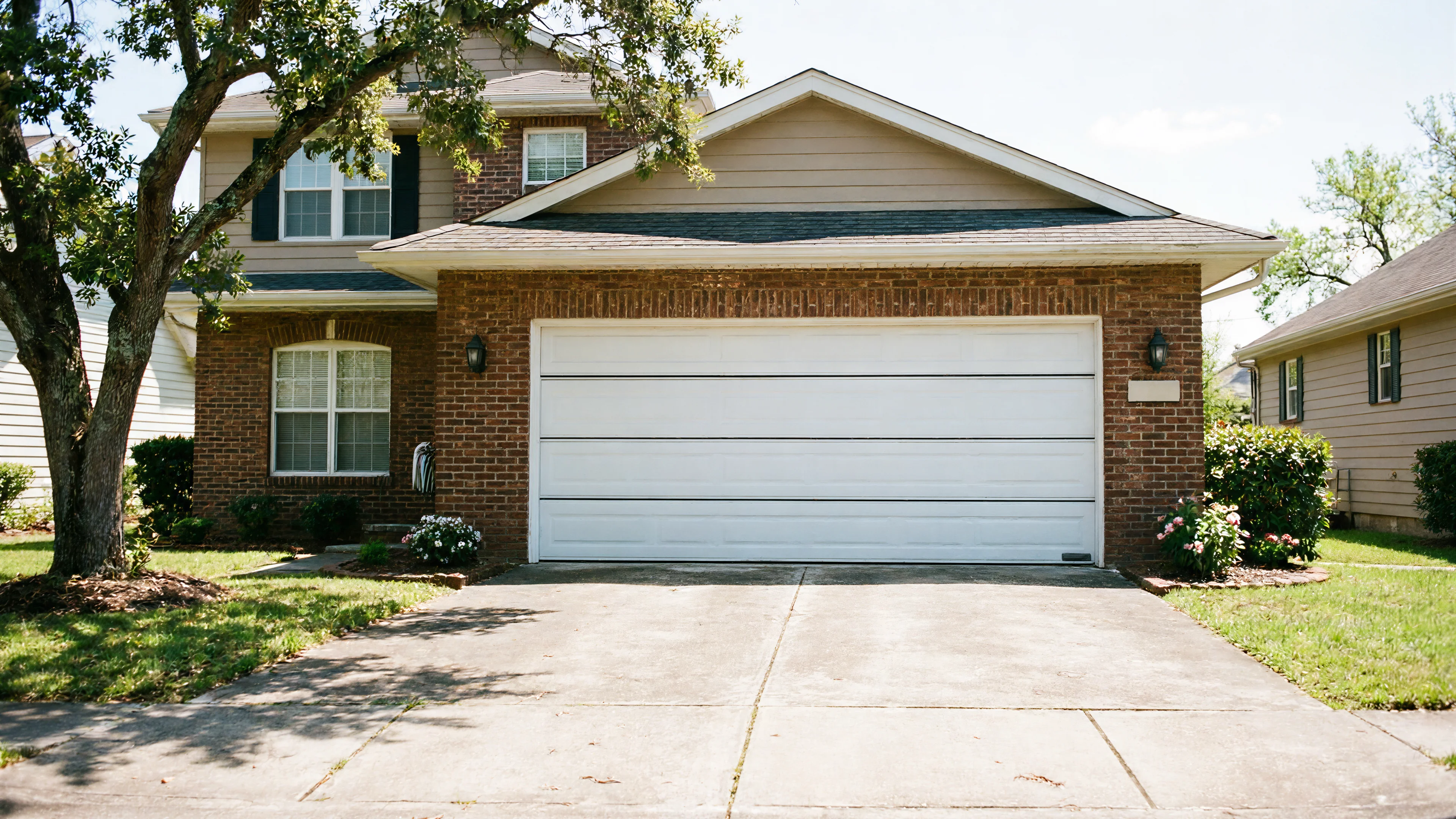
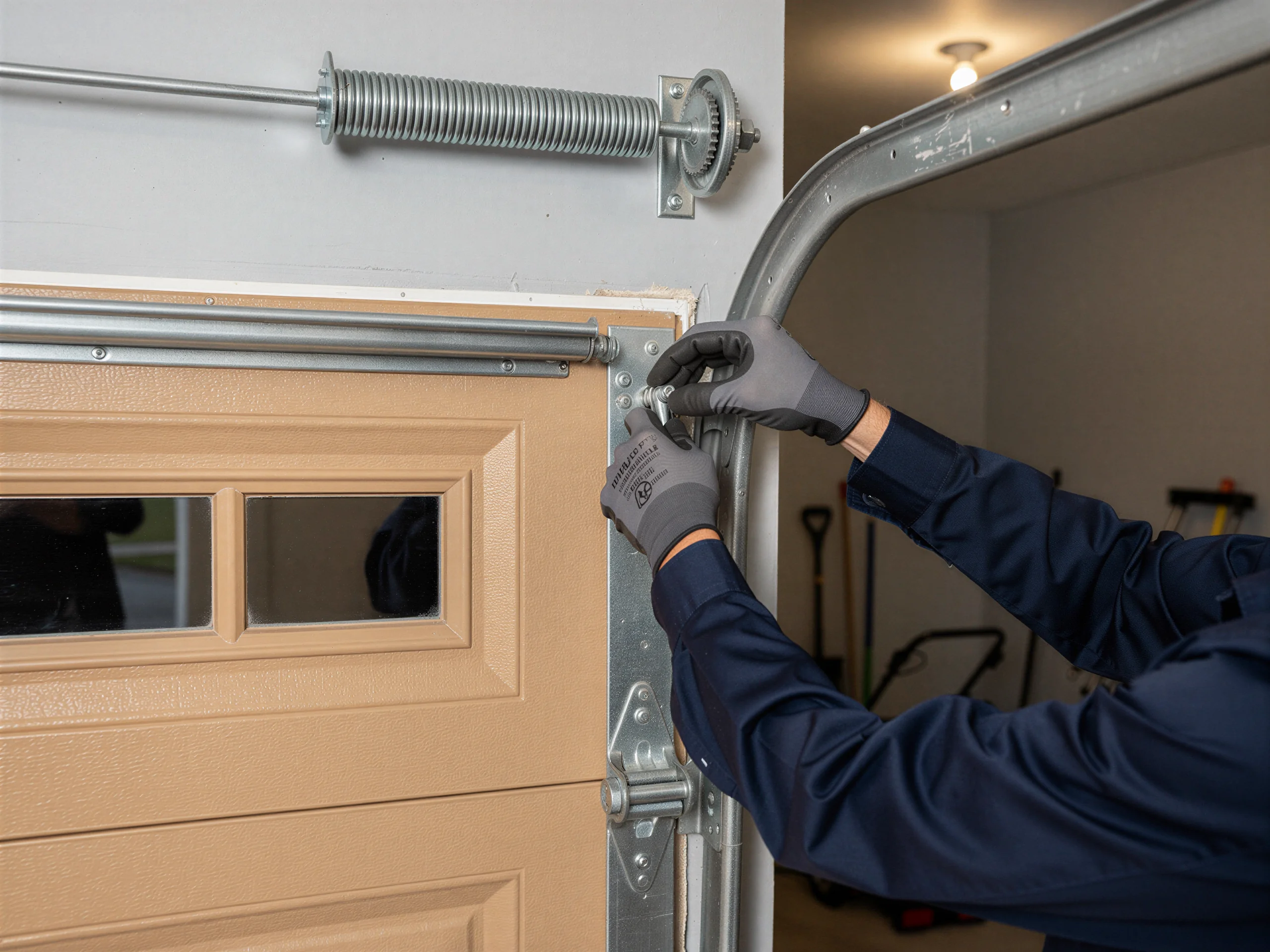
A straightforward torsion spring replacement on a standard double door is usually a same-visit fix once we're in the driveway - the part itself isn't the slow part, diagnosing what else got stressed when the spring went is.
If a cable snapped along with it, or the drum is scored, that adds time but still fits in one visit for most houses in this area. Where it stretches out is parts availability on older doors.
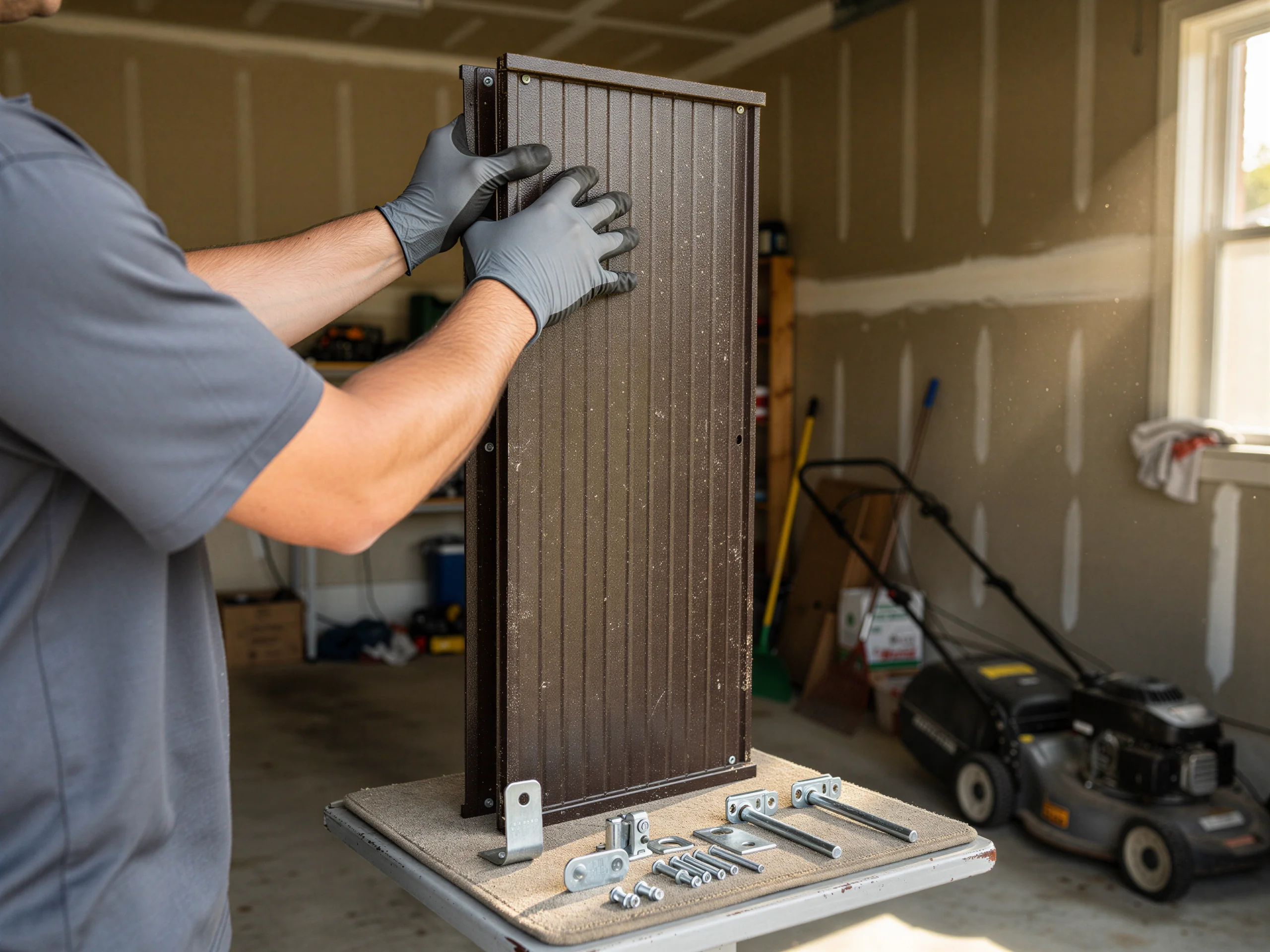
A door original to a house built in the 80s or early 90s sometimes used hardware sizes or panel styles that aren't on the truck and aren't fast to source. If that's your situation, we'll tell you straight that it's a parts-lead-time problem, not a labor problem, rather than stringing you along.
Opener issues are usually quicker to resolve than spring issues, since most failures are a worn gear, a dead capacitor, or a sensor knocked out of alignment - not the motor itself. We don't pad timelines to sound impressive, and we don't rush a spring job, because that's the one place on a garage door where rushing gets someone hurt.
DIY or pro
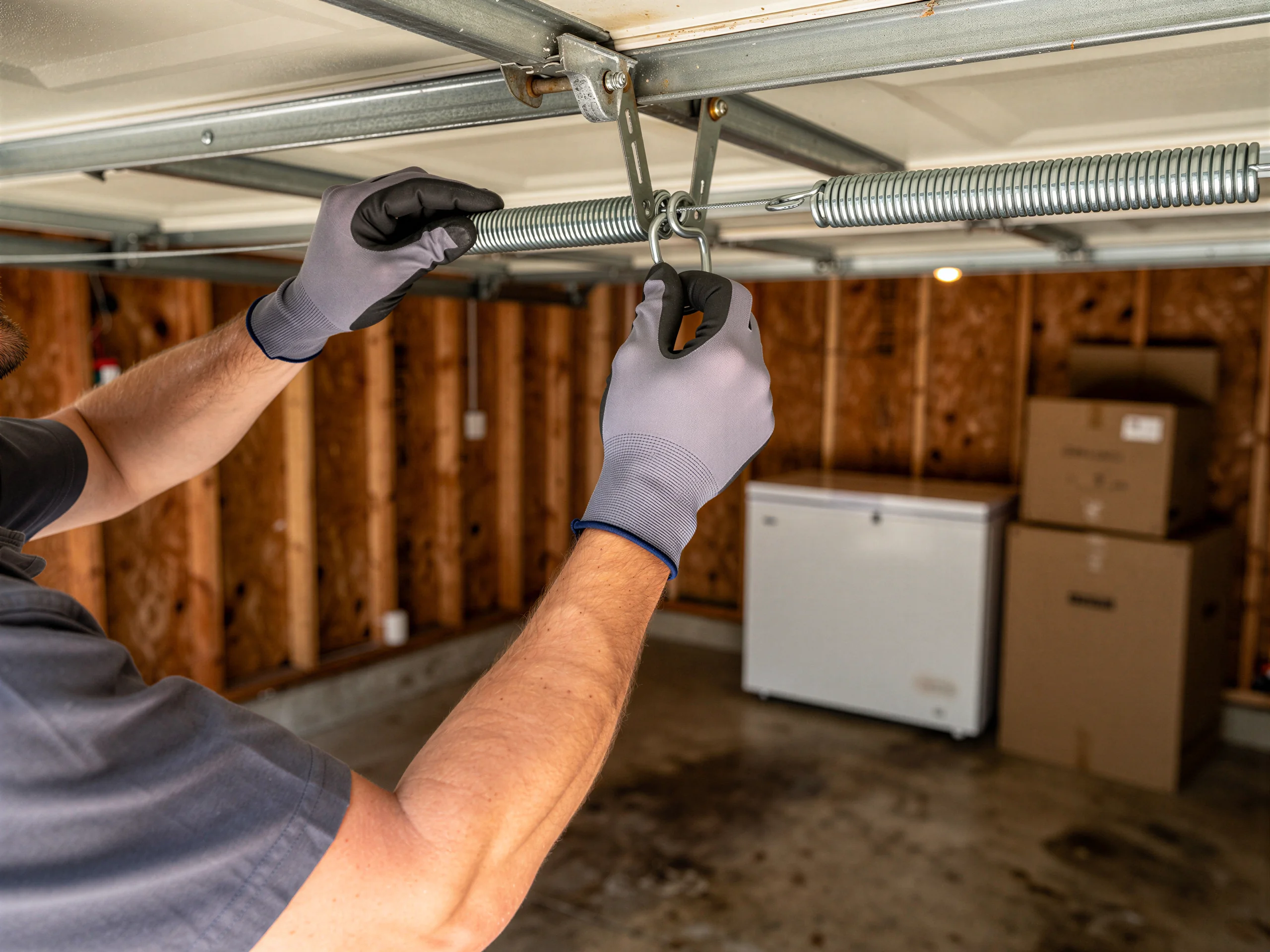
There's a real line between what's reasonable to handle yourself and what isn't, and the torsion spring is on the wrong side of that line.
A wound torsion spring holds enough stored energy to break a bone or worse if it lets go while you're working on it, and the winding bars and clamps to do it safely aren't things most households have sitting in a drawer. We'd rather lose a job to someone's good judgment than gain one from a bad decision.
What you can reasonably check yourself: the photo-eye sensors near the floor track (a lot of "opener won't close" calls turn out to be a sensor knocked out of alignment, or dirt on the lens), the weatherstripping along the bottom panel, and whether the tracks are visibly bent or the rollers are cracked. None of that requires tools beyond a rag and a level.
If you're hearing a loud bang followed by the door refusing to move, that's almost always the spring, and that's the call to make, not the project to start. Lubricating hinges and rollers once or twice a year with the right garage-door-rated lubricant is worth doing yourself and does more for longevity here than almost anything else, given how the damp-then-freeze cycle treats unprotected steel.
Warning signs
A door that slams the last foot of travel instead of lowering smoothly is usually a spring that's lost tension, not an opener problem - the opener is just no longer getting help from a spring that used to carry most of the weight.
A door that's noticeably heavier to lift by hand than it used to be is the same story. Grinding or popping sounds from the rollers, especially on a door original to an 80s or 90s build, often means the rollers themselves have worn flat on one side, which happens faster here because of how the moisture-and-cold cycle affects old lubricant inside the roller bearing.
Rust streaks on the torsion bar or springs are worth a look too - surface rust on its own isn't an emergency, but it's a sign the spring is aging faster than the rest of the door.
A door that opens but won't fully close, stopping a few inches short, is very often the photo-eye sensor, not the spring or the opener motor - check for anything blocking the beam before assuming the worst. If the door is off its track entirely, stop using the opener and call, since forcing it can bend the track further and turn a repair into a replacement.
Questions
Houses here mostly date to the 1980s and 90s, so a lot of original springs are 25-40 years old and well past their rated cycle count. The mild climate with occasional freeze also means lubricant stiffens on cold nights after months of humidity, which speeds up rust and spring fatigue compared to a dry climate.
We don't recommend it. A wound torsion spring stores enough energy to cause serious injury if it releases while you're working on it, and the winding bars needed to do it safely aren't common household tools. It's one job where calling someone is worth the cost.
Most torsion spring replacements on a standard double door finish in a single visit. The variable is parts - if your door uses older hardware sizes common to 1980s-90s builds, sourcing that part can add time. We'll tell you up front if that's the case rather than guess at a timeline.
Usually not. That pattern points to the photo-eye sensor near the floor track, often knocked out of alignment or blocked by dust or an object in its path. Check the sensor lenses first before assuming it's a spring or opener failure.
Explore more
Ready when you are
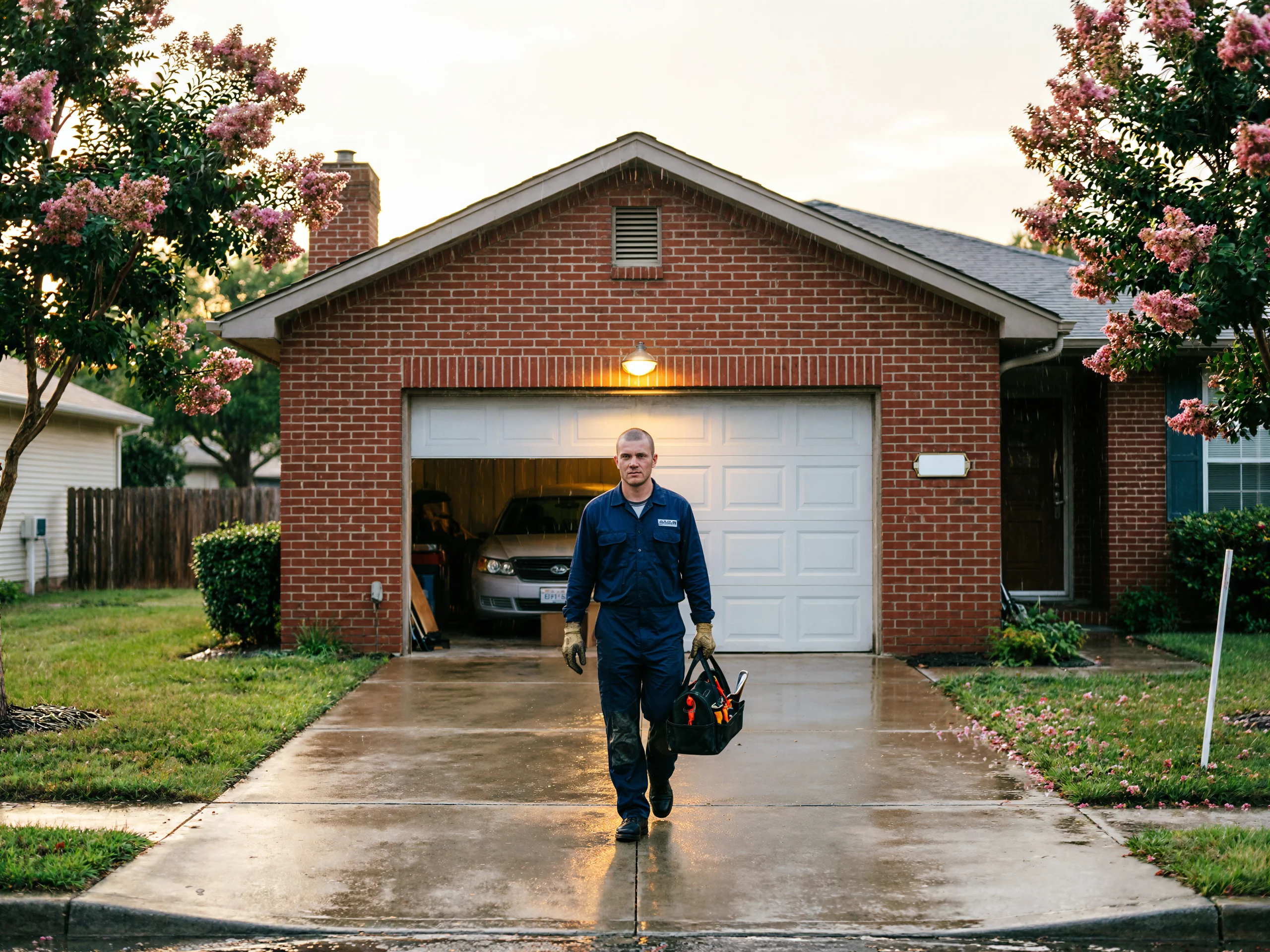
Denham Springs Garage Door Pros repairs and installs garage doors, springs and openers in Denham Springs, LA and the surrounding area.