
Original springs past life
Houses here cluster around a 1989 median build year, which puts most of Old Jefferson's original springs and drums well past the point where a spring just wears thin and snaps clean.
Old Jefferson, Denham Springs
Old Jefferson homes date mostly to 1989, meaning torsion springs sized for that era's doors. Denham Springs Garage Door Pros repairs them, 7 miles out.
Timing
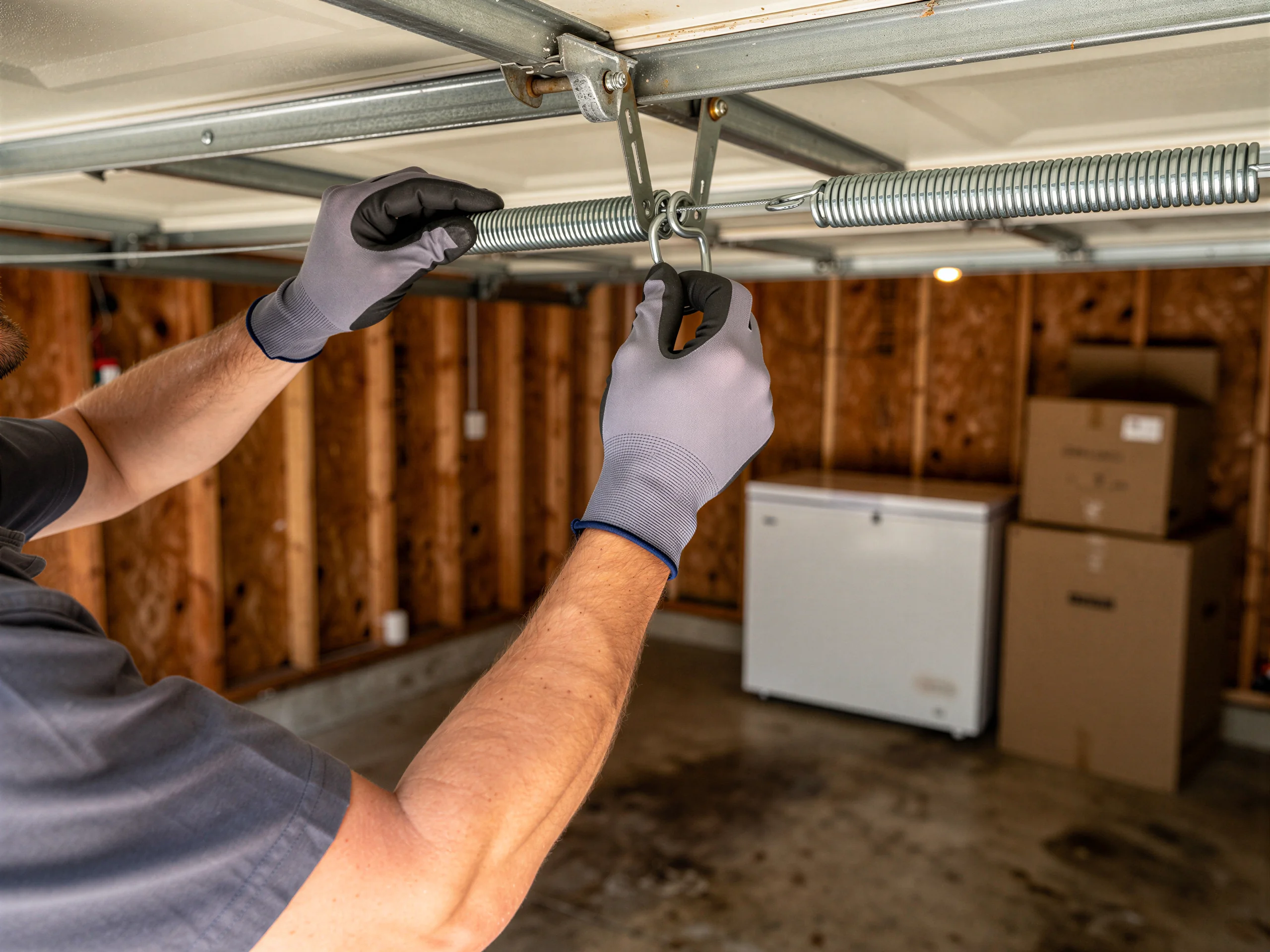
We work out of Denham Springs, 7 miles from Old Jefferson, so the drive is part of every call. Once we're on site, a standard torsion spring swap on a double door runs about the same regardless of town - it's the condition of the hardware underneath that slows a job down or speeds it up.
Houses here cluster around a 1989 median build year, which puts most of Old Jefferson's original springs and drums well past the point where a spring just wears thin and snaps clean.
On a door that's had one or two openers bolted on since the house was built, we're also checking whether the original torsion bar and bearing plates were ever swapped out, because if they weren't, the new spring has to be matched to hardware that's 30-plus years old, not to a modern kit.
That's a five-minute check, not a redo of the job, but it's a step a lot of the newer construction around the wider service area doesn't need. We don't carry every spring size on the truck for every build era, so if the wind length or wire gauge is unusual, that's the one thing that can turn a same-visit job into a return trip.
Our process
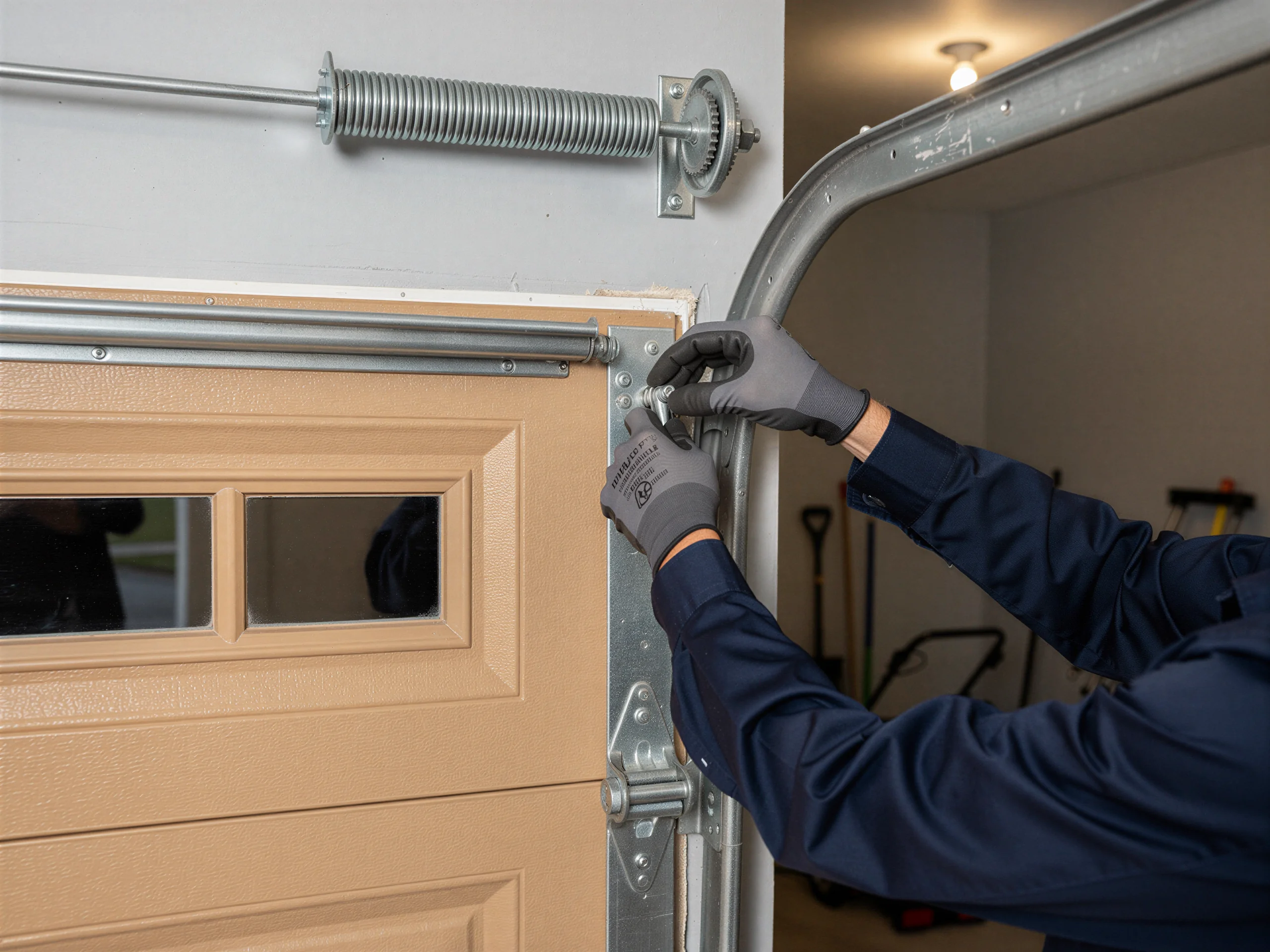
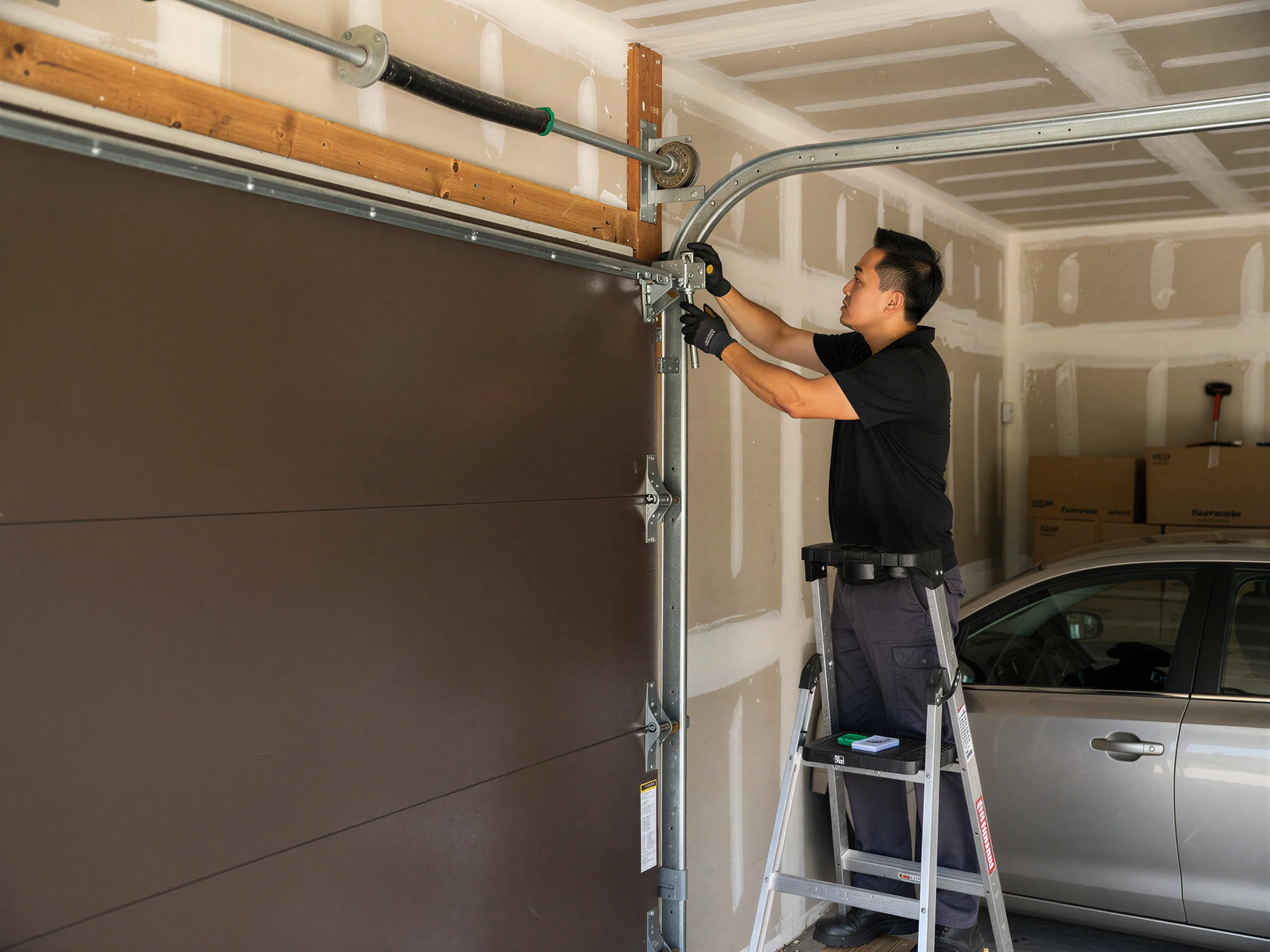
The fix itself is straightforward: we lock the door down, release tension on the old spring with winding bars, pull the broken halves off the torsion tube, and wind in a replacement sized to the door's weight and the drum's cable pull.
What changes house to house in Old Jefferson is the sizing math. With a median build year of 1989, a lot of doors here still run original torsion hardware from that 1980s-90s wave - single-spring setups on single doors, double-spring on two-car garages, often with the stamped steel end bearings that era used.
We measure wire diameter, coil length, and inside diameter off the broken spring itself rather than guessing from the door's age, because even within the same build decade, the original installer sometimes under- or over-sized for the door's panel weight.
We also check the cable and the bottom brackets while the door's unloaded, since a cable fraying on 30-year-old hardware is a common second failure that shows up the same month as the spring. We don't replace parts that aren't failing - if the opener and track are sound, they stay.
Watch-outs
The complication in Old Jefferson isn't the climate - this part of Louisiana sits in a mild band with occasional freeze, which is gentle on steel compared to a true cold-snap region, so spring metal fatigue here is mostly a function of cycle count and age, not weather stress.
The complication is parts matching. A door built when the area's housing stock went up in that 1962-2013 range, with most of it clustering in the 80s and 90s, often has torsion hardware that's no longer a stock size at every supplier.
If the drum or bearing plate is pitted or cracked rather than just the spring, we'll say so before we quote a spring-only job, because winding a new spring onto a cracked drum is a repair that fails again inside a year.
We won't sell a spring swap on a door where the real problem is a bent track or a warped panel - that's a different job, and padding a spring ticket with work that won't hold isn't worth either of our time. If your opener motor also strains to lift the door, that's usually the spring, but we check the motor capacitor too before we call it done.
Warning signs
A snapped torsion spring usually announces itself the same way regardless of build year: the door won't lift past a few inches with the opener straining, or it drops fast and uneven when you pull the release cord. On a house from Old Jefferson's 1989-ish build window, look for a visible gap in the coil above the door, or a loud bang from the garage that you heard before the door quit working - that bang is almost always the spring parting. If the door looks fine but the opener motor sounds labored and hot to the touch, that's the spring transferring its job to the motor, which wasn't built to lift panel weight unassisted. Don't try to force the door up by hand or disconnect the opener and muscle it - a loaded or half-broken torsion spring under tension is the single most dangerous part of a garage door, and it's the reason we ask customers not to touch the winding cones themselves, even with the right bars on hand.
Questions
Most houses in this area went up around 1989, within the broader 1962-2013 range for the service area, so original torsion springs here are commonly 25 to 35 years old. That's well past typical spring life measured in open-close cycles, which is why unannounced snaps are common on houses that haven't had the spring replaced since the build.
We stock common wire gauges and coil lengths, but a door with unusual original hardware from the 1980s-90s build wave can need a size we don't carry on every visit. We measure the broken spring on site and order an exact match if needed rather than force a near-fit that'll fail early.
Not really. This area sits in a mild band with only occasional freeze, which is gentler on steel than a true cold-winter region. Spring failure here tracks cycle count and age far more than weather, which is why a 1989-era spring is the bigger factor than any single season.
We'd rather you didn't. A torsion spring under tension can cause serious injury if it releases while you're working on it, even with the right winding bars. If you're not doing this daily, the risk isn't worth the cost of a service call from Denham Springs.
Explore more
Ready when you are
Denham Springs Garage Door Pros repairs and installs garage doors, springs and openers in Denham Springs, LA and the surrounding area.